

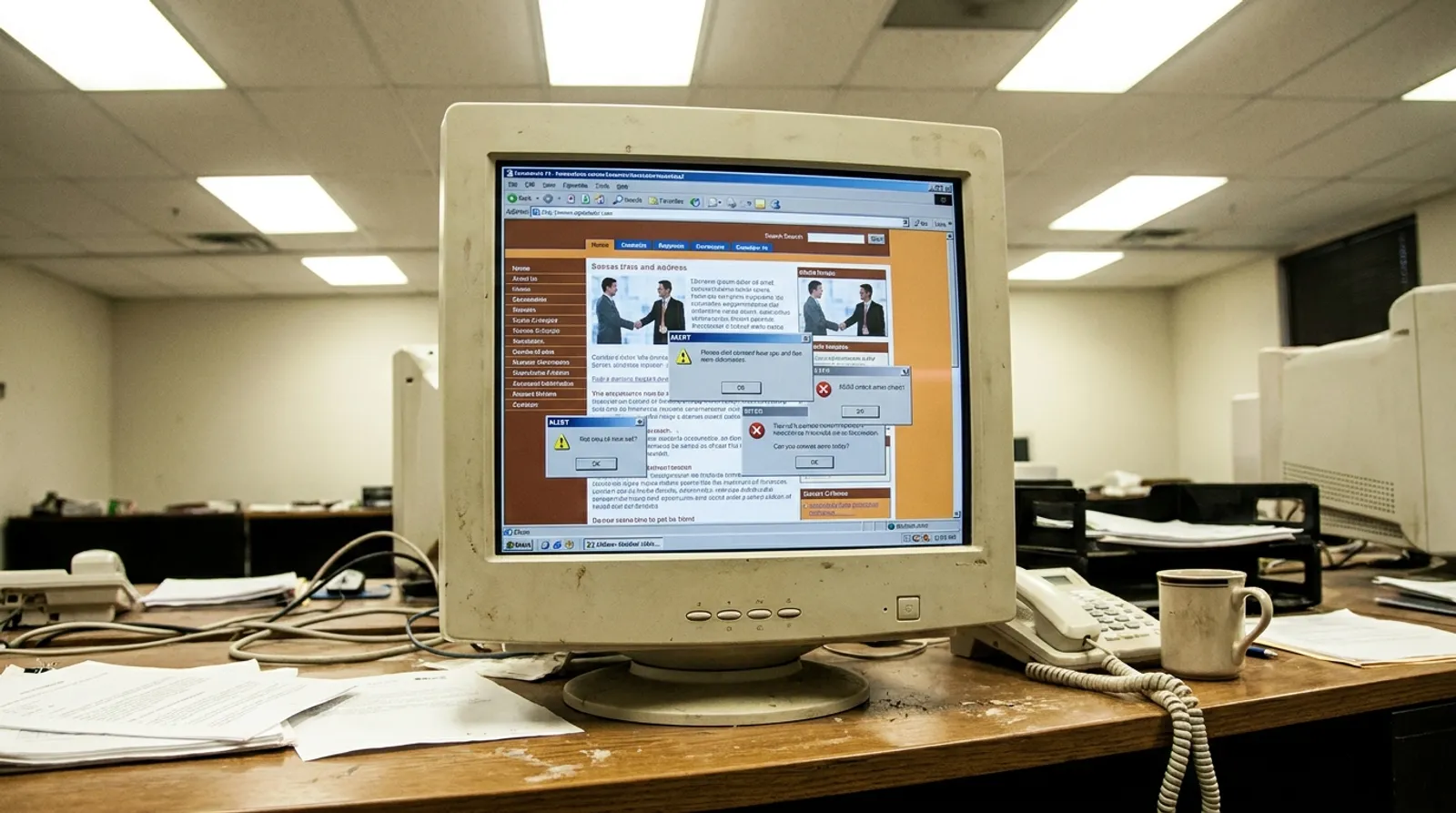
Your business has changed over ten years: more staff, more services, more demanding customers. Your website, probably not. And that gap between what your business is worth and what it shows on screen has a real cost — even if it never shows up on an invoice.
We see it every week in the diagnosis: excellent businesses losing opportunities not because of their work, but because of their digital storefront. The good news: the lag can be measured, scoped, and closed in stages.
The gap your balance sheet doesn't show
The 2026 customer compares before calling. They visit three or four websites, form an impression of each company's level, and rule you out in seconds. If your website still reads 2014 — slow, not mobile-friendly, stock photos, generic copy — the customer assumes the company runs the same way. It's unfair, but it's how the decision gets made today.
The lag doesn't just cost you new customers: it costs internal hours. Quotes drafted by hand, requests arriving through three different channels, content nobody can update without calling a technician. Each friction is small; the total isn't.
What it costs you every month, in concrete terms
Run this quick calculation with data from your own operation:
- ›The comparison-shopping customer: how many quotes do you lose each month to competitors with a better presence? A single one is often enough to pay for the entire website.
- ›Manual admin hours: requests by email, reminders by phone, data copied between spreadsheets. Multiply by your team's hourly cost.
- ›Decisions made without data: without clear statistics, investment in visibility happens blind — or doesn't happen at all.
- ›Dependence on one person: if only an outside contractor can touch the website, every small change costs days and money.
How to measure your lag in one afternoon
You don't need a three-week audit. Open your website on a phone, time how long it takes to load, search for your trade on Google and on ChatGPT, and try changing a price yourself. Four tests, four answers. If two fail, the lag is already costing you money.
Add a fifth: ask someone you trust to compare your website with your two strongest competitors, without telling them which is which. Their gut reaction is worth more than any report.
Where to start closing it
The usual mistake is to start with the cosmetics: change the template and leave the operation untouched. The right order is the reverse — first decide what the website needs to do (capture requests, sell, filter, inform), then design around that goal, and deliver it with a panel your own team manages.
That way, a website stops being an expense you renew every five years and becomes a tool that captures, converts, and gives you hours back — because delivery is just the beginning: your platform evolves every month with the studio that built it. That's the standard we work to on every project.
Digital lag isn't fixed with a new template: it's closed with a website designed around your real operation, a panel your team controls, and clear numbers every week. Everything else is makeup.